.png)
May Learning at Home with HIPPY Halton
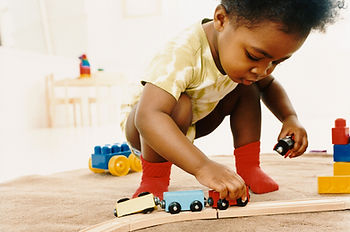
At HIPPY Halton, we believe children learn best through play, conversation, and meaningful family moments. Each month, we share activities that build important early childhood education skills in language, math, science, physical development, and social and emotional growth.
Our home based program supports parents as their child’s first teacher by providing simple, practical tools that help children feel confident and ready for kindergarten.
This May, we will focus on important school readiness skills including recognizing shapes, building listening skills, exploring movement and the body, and learning about community helpers. These activities support children’s development while helping families create fun and meaningful learning experiences at home.
Week 1: Shapes and Patterns
This week children build early math and visual thinking skills by learning to recognize shapes and patterns in everyday life. Understanding shapes helps children with problem solving and early geometry.
Activities to Try
Language and Reading: Read Round is a Mooncake by Roseanne Thong. Talk about shapes you see in the book and in your home.
Math: Shape Hunt. Walk around your home and find objects that are circles, squares, or triangles. Try this: https://toddlerapproved.com/shape-matching-activity-for-preschoolers/
Science: Build with Shapes. Use blocks or paper shapes to create simple structures and talk about how shapes fit together. try this: https://readysetgopreschool.com/shapes-activities/
Social and Emotional: Create a Pattern Together. Take turns making a simple pattern using colours or shapes and follow each other’s ideas. Try this: https://www.deepspacesparkle.com/color-line-and-pattern-art-project/
Make It Work for Your Child
Use large, easy to hold shapes made from paper or cardboard. Let your child trace shapes with their finger before naming them. Focus on one or two shapes at a time if needed.
Week 2: Listening and Following Directions
This week supports language development and self regulation. Learning to listen and follow simple directions helps children succeed in group settings and classroom routines.
Activities to Try
Language and Reading: Read Listen, Listen by Phillis Gershator. Talk about sounds you hear every day.
Math: Follow the Steps Game. Give simple instructions like “clap two times” or “jump three times.” Try this: https://www.uen.org/core/health/activities/
Science: Sound Walk. Go outside and listen for different sounds like birds, cars, or wind. Try this: https://raisingchildren.net.au/guides/activity-guides/out-and-about/listening-walk
Social and Emotional: Simon Says Game. Practice listening carefully and following directions in a fun way. Try this: https://www.thebestideasforkids.com/simon-says-ideas/
Make It Work for Your Child
Use short, clear instructions. Show actions while saying them. Repeat directions if needed and allow extra time for your child to respond.
Week 3: Movement and Body Awareness
This week helps children develop physical coordination and awareness of how their body moves. Movement supports both physical health and learning readiness.
Activities to Try
Language and Reading: Read From Head to Toe by Eric Carle. Act out the movements together.
Math: Movement Counting. Count how many jumps, claps, or steps your child can do. Try this: https://youtu.be/pTD146k03ww?si=PFLQifZVMbCeuVaK
Science: How the Body Moves. Talk about body parts and how they help us move. Try this: https://youtu.be/yozPdOmOrlQ?si=FkwP242-kajp8joH
Social and Emotional: Movement Freeze Game. Dance to music and freeze when it stops. Practice self control and focus. Try this: https://youtu.be/2UcZWXvgMZE?si=MAtaYjOEjukJCc89
Make It Work for Your Child
Adapt movements to your child’s ability. Movements can be done sitting or standing. Focus on fun and participation rather than perfect movement.
Week 4: Community Helpers
This week builds awareness of the people who help us in our community. Children learn about different roles and develop respect and appreciation for others.
Activities to Try
Language and Reading: Read Whose Tools Are These? by Sharon Katz Cooper. Talk about different jobs and tools people use.
Math: Match the Helper. Match community helpers to the tools they use. Try this:
Science: How Things Work. Talk about how tools like a hose, stethoscope, or garbage truck help people do their jobs. Try this: https://youtu.be/ZBqg6US6CVo?si=rohanuatMdby3Rma
Social and Emotional: Role Play. Pretend to be a doctor, firefighter, or teacher and act out helping others. Try this: https://thespeechroomnews.com/2022/07/community-helpers-and-pretend-play.html
Make It Work for Your Child
Use pictures or toys to represent different helpers. Keep role play simple and allow your child to explore freely. Encourage conversation about helpers they see in their daily life.


Comments